Over the past few years, the vehicle cabin has evolved far beyond its traditional role as a functional driving environment. In step with broader mobility trends such as electrification, automation and software-defined intelligence, the car interior has steadily grown into a flexible living space – one capable of supporting a wider range of everyday needs during the journey.
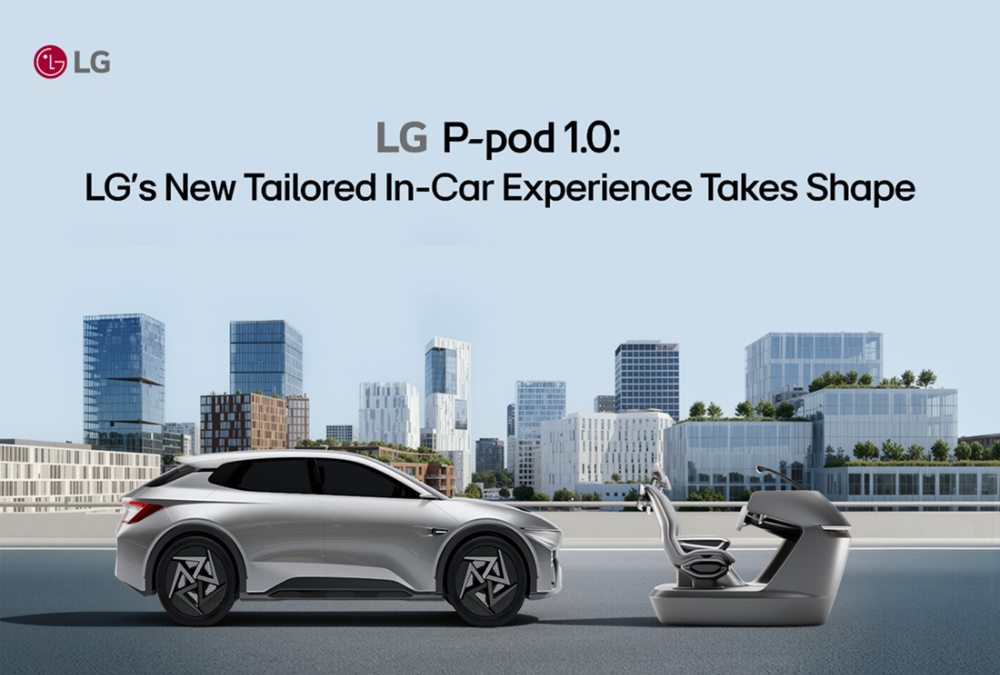
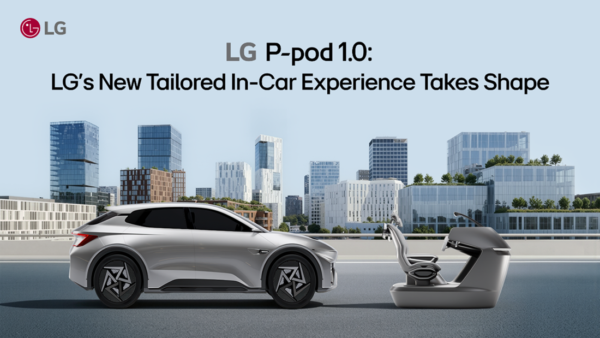
Building on this industry evolution, we at LG are exploring how in-cabin experiences may further develop through our next-generation concept platform, LG P-pod 1.0. This solution combines LG Mobility AI and advanced technologies developed across our Vehicle Solution (VS) Company.
LG P-pod is the new name we’ve given to the digital cockpits that we develop to test advanced mobility innovations before they reach commercialization. The “P” stands for Prototype, highlighting its role as an early-stage concept and a practical testbed for our mobility technologies. The word “pod” refers to the cabin itself – a modular, human-centered space where multiple technologies work together. It also evokes the image of a pea pod, symbolizing how key in-car systems – from the head unit and displays to connectivity solutions and the Advanced Driver-Assistance System (ADAS) Vision System – fit seamlessly within one cohesive environment. At once functional and symbolic, LG P-pod represents a future-oriented yet emotionally resonant design philosophy – where innovation feels intuitive, and the name itself remains simple and memorable.
Let’s take a closer look at how we’re using LG P-pod 1.0 as a test platform to drive in-cabin experience innovation.
1. Empathetic Interaction: Exploring How Cars Can Understand and Respond
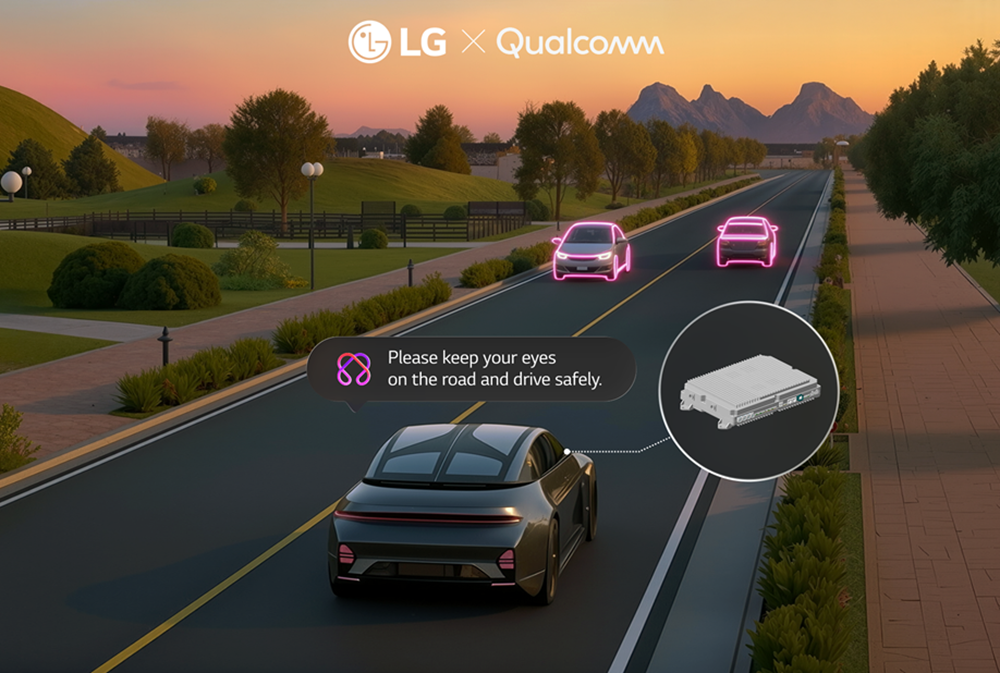
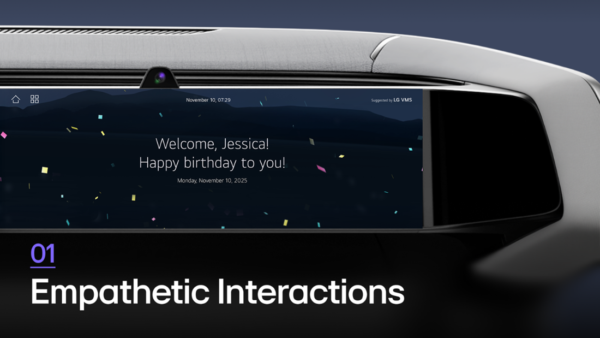
It starts with recognition – a car that sees you, knows you and responds before you even ask. LG P-pod 1.0 serves as a technology incubator, exploring how future vehicles might identify drivers through a Driver Monitoring System (DMS), retrieve schedules or prepare frequently used apps to support more natural interaction.
These foundational technologies help us investigate how vehicles could evolve from simple awareness to context-responsive behavior. The adaptive portrait display shifts orientation for better visibility, while the LG Mobility AI-based voice interface provides a platform for studying more conversational, human-like interactions. Combined with front-camera data and Vehicle-to-Everything (V2X) connectivity, the system also enables research into precise stopping points or personalized in-cabin moments – such as lighting, music and animations that respond to special occasions like a birthday or an anniversary.
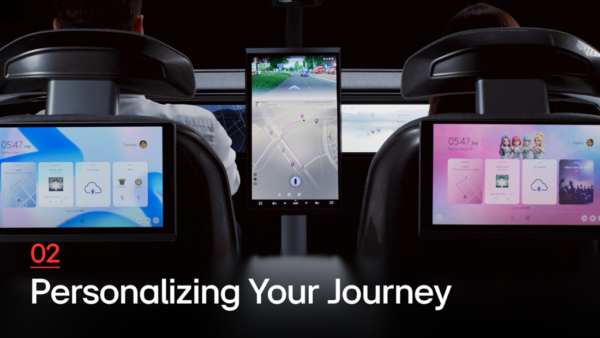
2. Personalizing Your Journey: Enabling Mobility to Adapt to Every Individual
While traditional personalization has centered on the driver, LG P-pod 1.0 acts as a technology incubator for extending tailored experiences to all passengers. Powered by the Driver & Interior Monitoring System (DIMS), the platform explores how it can recognize the conditions and preferences of both the driver and passengers in real time, offering tailored entertainment – from OTT services and music to games and apps – instead of mirroring the same content across every screen.
Shared experiences can also be enhanced. Group decisions, like choosing a restaurant, can be made through an on-screen voting feature that syncs results across displays. An AI recommendation engine suggests destinations, routes and entertainment based on contextual information. With profiles that follow each user and settings that activate automatically, LG P-pod 1.0 turns the car into a space where every passenger’s journey feels personal – whether it lasts ten minutes or two hours.
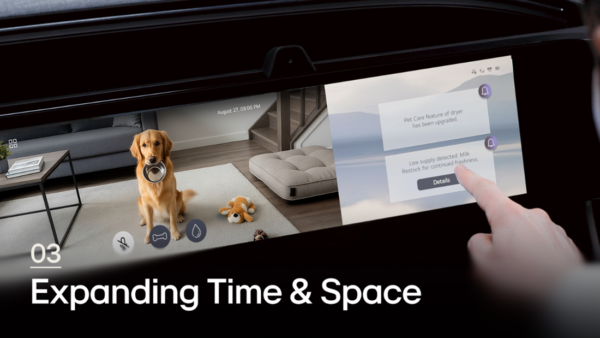
3. Expanding Time and Space: Shaping How Life Can Continue Seamlessly on the Road
LG P-pod 1.0 reimagines the vehicle not as an isolated environment but as a lifestyle enabler that helps explore new forms of seamless connectivity. Through the Smart Telematics System and integration with smart home appliances, it serves as a platform for exploring how users might control home devices from inside the car – including air conditioning, lighting, robot vacuums and even pet feeders. Through real-time data exchange, the system also investigates ways to enable remote awareness of home cameras and sensors, helping to keep the home and vehicle connected and offering greater peace of mind while on the road.
This seamless connection extends to entertainment as well. Videos or music started at home can resume playing inside the vehicle, making the cabin a natural extension of each user’s personal environment. By reducing the boundary between “on the road” and “at home,” LG P-pod 1.0 acts as a platform for experimenting with new connected-life experiences where travel time becomes an uninterrupted part of everyday living.
“By leveraging LG P-pod 1.0 as an incubator for LG’s mobility technologies, we’re taking a meaningful step toward our vision of a ‘Living Space on Wheels,’ where the vehicle becomes a personalized environment that supports every part of your lifestyle,” said Alexio Rhee, head of Global Customer Strategy at the LG Electronics VS Company. “By combining empathetic interaction, multi-profile personalization and seamless connectivity between the car and the home, LG is redefining what the in-cabin experience can be.”
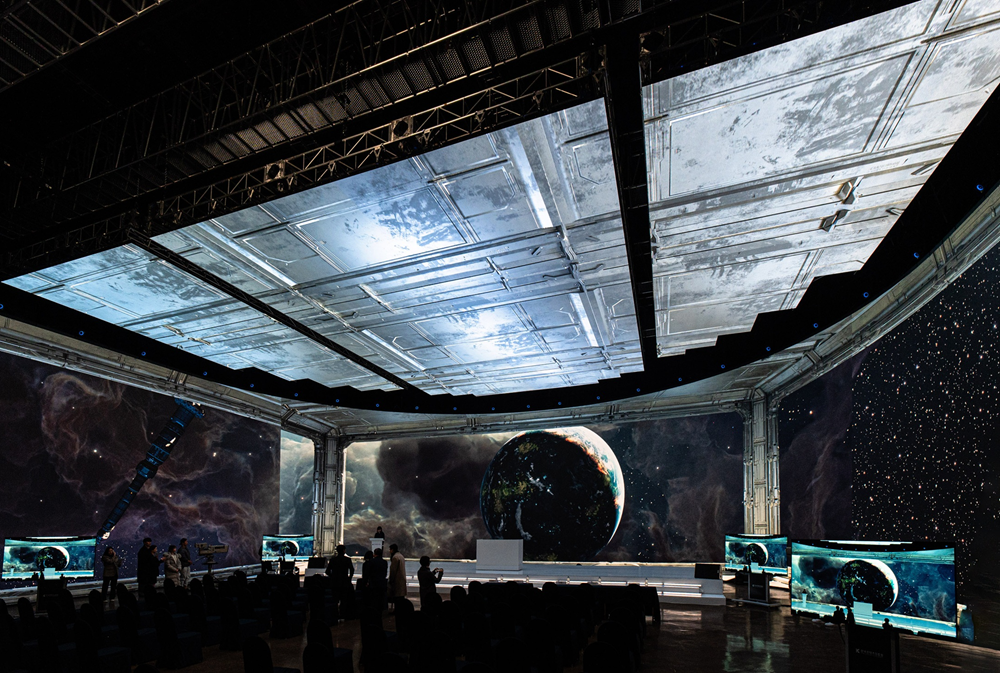
We’re unveiling LG P-pod 1.0 to a global audience as part of our “LG on board” mobility campaign, sharing how elements such as intelligent understanding, personalized adaptation and immersive interaction may shape future in-car experiences. Through a series of stories – beginning with the first core value, “Empathetic Interaction,” revealed on December 15 and followed by additional values later in the month – we aim to offer a glimpse into a more meaningful way of experiencing life on the move.
# # #